German economy in a prolonged recession: why the recovery of Europe’s largest economy is being postponed
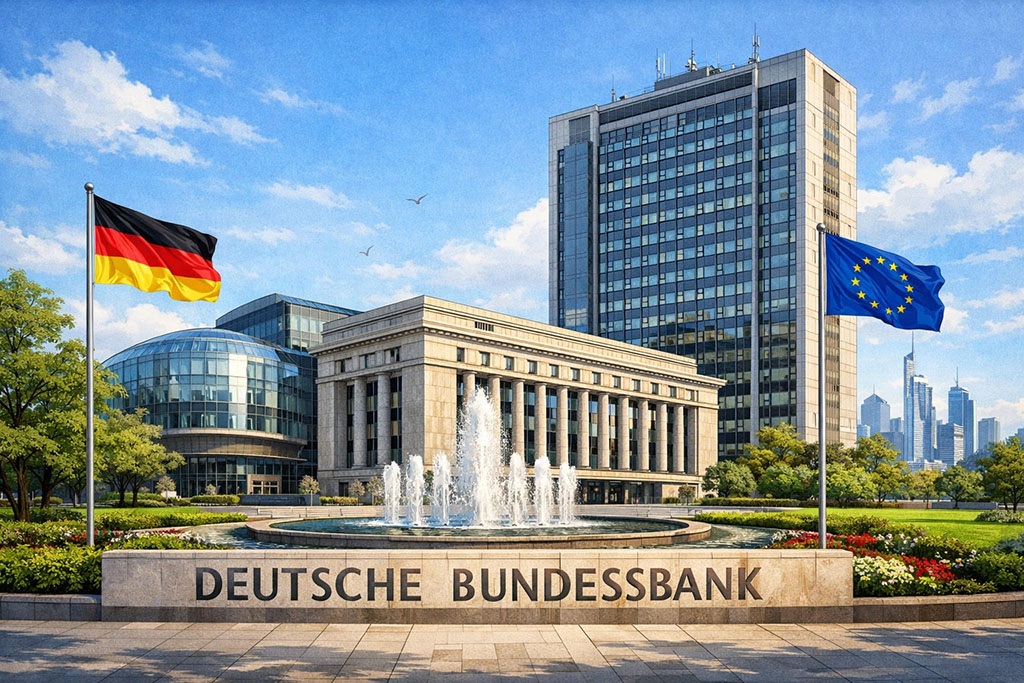
27.12.2025Germany, the engine of the European economy, is in the longest period of stagnation in the last several decades. The latest messages from the Bundesbank clearly indicate that a rapid recovery is not in sight and that the exit from recession will be slow, gradual, and burdened by structural constraints.
Although markets in previous months nurtured a certain optimism that fiscal stimuli from the new German government – especially those financed through borrowing – would accelerate the return to growth, the central bank has significantly dampened those hopes. According to updated projections, Germany will only reach the level of gross domestic product it had before entering the recession during 2026.
Weak growth despite fiscal expansion
The Bundesbank has lowered its growth forecast for 2026 to just 0.6%, while a more moderate recovery of 1.3% is expected for 2027. However, even with these figures, the central bank warns that risks remain clearly “tilted to the downside.”
It is crucial to emphasize that part of the growth for 2026 relies on technical factors, such as a higher number of working days, rather than on a real strengthening of investment, productivity, or export competitiveness. Without these effects, real growth would be even more modest and noticeably below government expectations.
Deficits at record levels
The projection of public finances is particularly concerning. Germany’s budget deficit will almost double – from 2.5% of GDP to around 4.8% already this year, while by 2028 the deficit is expected to rise to as much as 6.8% of GDP. This would be the highest level since German reunification, excluding crisis periods such as the global financial crisis and the pandemic.
Although part of the new borrowing is formally directed toward economic stimulus, the Bundesbank warns that a significant portion of the funds is being spent on social transfers, tax relief, and current expenditures, rather than on long-term infrastructural and productivity-enhancing investments.
Structural problem: rising costs, declining competitiveness
One of the key problems of the German economy remains the sharp rise in labor costs not related to wages. The costs of social contributions and healthcare have reached a historical maximum and already account for about 44.5% of total labor costs. This trend directly undermines the competitiveness of German industry, especially in comparison with the United States and Asian markets.
At the same time, inflation is easing more slowly than expected. The Bundesbank estimates that inflation will fall below the European Central Bank’s target of 2% only in 2026, with Germany representing the main source of that pressure within the eurozone.
A broader message for Europe and the region
Germany has been in a “clear recession since the end of 2022,” and the entry into a second consecutive decline in economic activity further confirms the depth of the problem. As the largest economy in the EU, prolonged stagnation has direct consequences for the whole of Europe – including the countries of the Western Balkans, which are strongly connected to the German market through exports, investments, and remittances.
For the economies of the region, this situation carries an important lesson: relying exclusively on a single economic center represents a long-term risk. Diversification of markets, sources of capital, and growth models becomes a necessity rather than an option.
Conclusion
The message of the Bundesbank is clear – fiscal stimuli can mitigate symptoms in the short term, but they do not resolve the essential structural weaknesses of the German economy. Without reforms that encourage productivity, investment, and competitiveness, Germany will remain in a regime of weak growth for years to come.
For investors, companies, and policymakers across Europe, this is a signal for caution, but also a call for strategic adjustment to the new economic reality.
/ / /
"Standard Prva" LLC Bijeljina is a company registered in Bijeljina at the District Commercial Court in Bijeljina. Company’s activities are accountancy, repurchases of receivables, angel investing and other related services. Distressed debt is a part of the Group within which the company repurchases the receivables, which function and are not returned regularly.
Lawyer’s Office Stevanović is the leading lawyer’s office in the region with the seat in Bijeljina. The LO abbreviation represents Lawyer’s Office of Vesna Stevanović and Lawyer’s Office of Miloš Stevanović.
Contact for media press@advokati-stevanovic.com or via telephone 00 387 55 230 000 or 00387 55 22 4444.