Miloš Stevanović: Call for Dialogue with the Banking Agency
28.10.2026Bijeljina, 28 October 2026
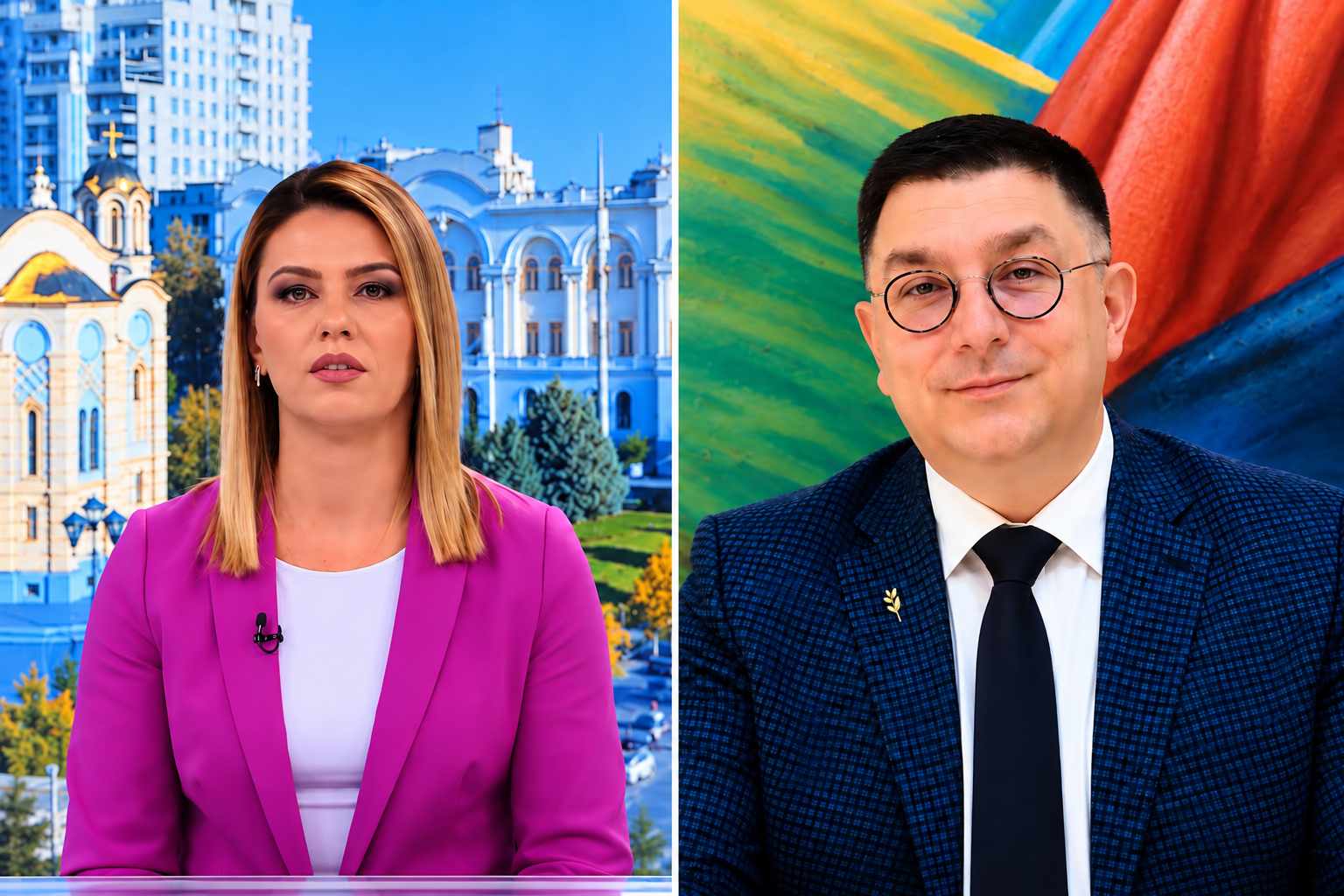
Attorney Miloš Stevanović, Senior Partner at Stevanović Law Firm, appeared on the morning programme of Radio Television of Republika Srpska (RTRS), where he discussed the outcomes of court proceedings brought against the Banking Agency of Republika Srpska, an initiative to review the constitutionality of high fees imposed on currency exchange offices, and the need to resolve institutional and financial disputes in Bosnia and Herzegovina through dialogue rather than lengthy court proceedings.
Courts Identify Irregularities in the Agency’s Conduct
Stevanović Law Firm represents 32 currency exchange offices from Republika Srpska in proceedings concerning decisions by the Banking Agency of Republika Srpska that significantly increased fees for issuing licences and supervising these businesses.
Under the disputed fee schedule, the supervisory fee was increased from the previous BAM 200 to as much as BAM 10,000, while the fee for issuing an operating licence was set at BAM 14,000.
Stevanović noted that significant progress had meanwhile been made before the District Court in Banja Luka, which upheld several lawsuits challenging the Agency’s decisions.
According to him, court practice has revealed serious legal questions concerning the way the Agency regulated licence renewals and the relationship between currency exchange offices, commercial banks and the regulatory body.
He particularly highlighted the problem of transferring certain supervisory responsibilities to commercial banks, placing them in an awkward position vis-à-vis their long-standing clients.
Although some proceedings have concluded in favour of the currency exchange offices, the Agency has continued to pursue available legal remedies before the Supreme Court of Republika Srpska.
Fees Must Be Reasonable, Proportionate and Economically Justified
One of the central topics of the discussion was the disparity between the fees paid by currency exchange offices in Republika Srpska and comparable fees in neighbouring jurisdictions.
Stevanović stated that the supervisory fee in Republika Srpska amounts to BAM 10,000, whereas, according to the figures he presented during the programme, the corresponding fee in the Federation of Bosnia and Herzegovina is just BAM 7, while in Serbia it is approximately BAM 270 in the equivalent local currency.
In his assessment, such a discrepancy raises serious questions regarding proportionality, economic justification and equal business conditions.
He emphasised that small currency exchange offices are not large financial institutions but often family-run businesses employing only a few people and providing their owners with a livelihood.
High regulatory fees, he warned, could force businesses to close, lead to job losses and reduce tax revenues.
Constitutional Review Proceedings Initiated Before the Constitutional Court of Republika Srpska
Stevanović Law Firm has initiated proceedings before the Constitutional Court of Republika Srpska to review the constitutionality of the disputed decisions adopted by the Management Board of the Banking Agency.
Stevanović stressed that the Court’s decision is expected to address issues extending beyond individual disputes, including legal certainty, the protection of business activities and the limits of regulatory powers.
He particularly emphasised the importance of maintaining legal certainty, meaning that businesses must be able to anticipate their obligations and plan their operations over the long term.
Regarding the possible consequences of a finding of unconstitutionality, Stevanović noted that the question of compensation could also arise for businesses that ceased operations because of the new fees.
Subject to the conditions prescribed by law, such claims could cover not only direct losses but also lost profits.
Call to the Banking Agency: Let Us Talk and Find a Solution
Despite the ongoing court disputes, Stevanović repeatedly emphasised that his law firm and representatives of the currency exchange offices remain fully open to discussions with the Banking Agency of Republika Srpska.
According to him, the aim is not to confront the regulator but to find a sustainable solution that ensures lawful supervision of the financial market while allowing currency exchange offices to operate without disruption.
A particular appeal was addressed to the Agency’s Management Board, which is expected to reconsider the consequences of its decisions and establish dialogue with business representatives.
Stevanović stressed that currency exchange offices do not dispute the need for regulatory supervision or the obligation to pay reasonable fees.
The issue, in his view, is whether the amounts charged are proportionate to the actual costs of supervision and the economic capacity of the businesses concerned.
European Practices and the Future of Payment Institutions
Discussing European regulatory standards, Stevanović said that the domestic financial system must gradually align its legislation with modern European solutions.
He particularly pointed to anticipated changes that legislation governing payment institutions is expected to introduce.
Such a regulatory framework could support the development of new financial services, improve access to payment services and modernise the operations of existing currency exchange offices.
In his assessment, regulatory policy should encourage the development of the financial market rather than threaten the survival of smaller businesses through administrative and financial burdens.
RTRS Financial Challenges: The Solution Lies at the Negotiating Table
In the final part of the programme, Stevanović also addressed the financial difficulties facing Radio Television of Republika Srpska, particularly disputes concerning the distribution of revenue from the public broadcasting licence fee and relations between public broadcasters in Bosnia and Herzegovina.
He argued that complex institutional problems cannot be resolved in the long term through frozen bank accounts, mutual accusations and shifting responsibility onto the judiciary.
In his view, the management of public broadcasters must take responsibility and engage in serious negotiations to find a lasting financial solution.
He stressed that courts are not the cause of institutional problems but the bodies responsible for resolving disputes that arise when timely agreements are not reached.
Stevanović expressed his support for RTRS employees, their professional efforts and their endeavours to secure stable working conditions and appropriate salaries.
He also welcomed the financial assistance provided to the public broadcaster by the Government of Republika Srpska, while noting that such measures cannot replace a lasting, systemic solution.
Legal Certainty and Institutional Accountability as Prerequisites for Economic Development
Speaking about the broader institutional environment, Stevanović highlighted delays in important decisions and the lack of accountability among individuals managing public systems.
As an example, he cited issues concerning the Ugljevik Mine and Thermal Power Plant, emphasising the importance of timely action before financial and legal problems escalate into serious crises.
His central message was that institutions must act proactively, responsibly and in the interests of citizens and businesses.
“Prevention is better than cure,” Stevanović said, emphasising that timely dialogue, responsible management and respect for legal certainty are the foundations of a stable business and institutional environment.
The programme concluded with the message that judicial protection remains an essential mechanism for safeguarding rights, but that responsible institutions must do everything possible to resolve problems before they develop into lengthy and costly disputes.
/ / /
"Standard Prva" LLC Bijeljina is a company registered in Bijeljina at the District Commercial Court in Bijeljina. Company’s activities are accountancy, repurchases of receivables, angel investing and other related services. Distressed debt is a part of the Group within which the company repurchases the receivables, which function and are not returned regularly.
Lawyer’s Office Stevanović is the leading lawyer’s office in the region with the seat in Bijeljina. The LO abbreviation represents Lawyer’s Office of Vesna Stevanović and Lawyer’s Office of Miloš Stevanović.
Contact for media press@advokati-stevanovic.com or via telephone 00 387 55 230 000 or 00387 55 22 4444.