How Does the Luxury Industry Behave in an Era of Global Turbulence?
23.07.2026The luxury industry has traditionally been regarded as one of the most resilient sectors of the global economy. Its customers possess above-average incomes and wealth, are less dependent on day-to-day fluctuations in interest rates, inflation, and living costs, while leading brands enjoy exceptional pricing power. Nevertheless, today's global turbulence demonstrates that luxury is not immune to crisis. During periods of uncertainty, luxury does not disappear; rather, it changes its form, geography, product categories, and customer structure.
Wars, trade conflicts, political instability, inflation, the slowdown of the Chinese economy, exchange-rate fluctuations, and declining consumer confidence have created an exceptionally complex environment in recent years. Following strong post-pandemic growth, the personal luxury goods market has entered a period of stagnation and modest decline. According to Bain & Company, the market was worth approximately €364 billion in 2024, while its value for 2025 is estimated at around €358 billion. This represents a decline of approximately two percent, although the market remains significantly above its 2019 level.
These figures show that the luxury industry is not facing the disappearance of demand but rather the end of a period of almost automatic growth. After several years during which brands could raise prices and expand sales with little resistance from consumers, buyers have become more selective. Global instability therefore acts as a test that separates genuinely strong luxury houses from those whose growth was driven primarily by overall market expansion.
Luxury Does Not Disappear in a Crisis—it Becomes Polarized
The most important characteristic of the luxury market during times of crisis is its polarization. Consumers with very substantial wealth generally continue spending. For them, purchasing jewelry, works of art, luxury real estate, yachts, or exceptionally rare products is not merely consumption but also a matter of identity, status, legacy, and, in certain cases, capital preservation.
By contrast, so-called aspirational consumers—members of the upper middle class who occasionally purchase luxury handbags, footwear, watches, perfumes, or fashion accessories—are far more sensitive to inflation, interest rates, housing costs, and fears of unemployment. It was precisely this customer segment that enabled luxury to expand beyond its traditional elite over the past decade.
When uncertainty arises, the aspirational consumer postpones purchases first. They do not necessarily switch to cheaper alternatives; they often simply decide not to buy anything at all. As a result, the luxury market becomes increasingly concentrated around its wealthiest clients during turbulent periods. Brands with strong access to this customer group demonstrate greater resilience, while those dependent on high sales volumes of logo-driven products experience more significant declines.
The industry is therefore increasingly divided into what is sometimes referred to as "absolute luxury" and "accessible luxury." Absolute luxury is built upon rarity, exceptional craftsmanship, controlled distribution, lengthy waiting lists, and close relationships with top clients. Accessible luxury depends much more heavily on marketing, trends, tourism, and the purchasing power of the upper middle class. During periods of disruption, the former model is generally far more resilient.
Price Alone Is No Longer Enough to Make a Product Luxurious
One of the industry's greatest problems has emerged not from external forces but from within. Over recent years, numerous brands have dramatically increased prices, sometimes without corresponding improvements in product quality, materials, customer service, or the overall client experience. Such a strategy could function while demand remained strong, but under conditions of slower economic growth it has become increasingly difficult to sustain.
Today's luxury consumer increasingly asks about value. The question is no longer simply whether they can afford a product, but whether the product justifies its price. This is particularly evident among younger consumers, who can easily compare prices, quality, country of origin, and resale value.
Consequently, a luxury house cannot build long-term exclusivity merely by increasing prices. If prices rise faster than quality, creativity, and desirability, the brand begins to lose its emotional authority. The product remains expensive but ceases to feel rare and exceptional.
This highlights the fundamental difference between increasing price and increasing value. A true luxury company can command premium prices because it has created an object of profound cultural, artisanal, and symbolic value. A weaker brand attempts to use a high price to create the illusion of value that has never truly been established.
The Strongest Brands Become Even Stronger
Global turbulence typically accelerates market concentration. During uncertain times, consumers gravitate toward trusted names, iconic products, and brands with strong resale value. As a result, leading luxury houses often gain market share at the expense of smaller or less established competitors.
Hermès represents perhaps the clearest example of a business model built upon tightly controlled production, limited availability, and extraordinary desirability of its flagship products. Customers do not perceive a Birkin or Kelly bag merely as a fashion accessory but as an object whose acquisition is not guaranteed simply by purchasing power. This scarcity protects the brand from overexposure and discounting.
A similar resilience can be observed in high jewelry. In the financial year ending March 31, 2026, Richemont recorded 14 percent sales growth in its jewelry maisons at constant exchange rates. Growth was achieved across all geographic regions and distribution channels, while specialist watchmakers delivered considerably more modest results.
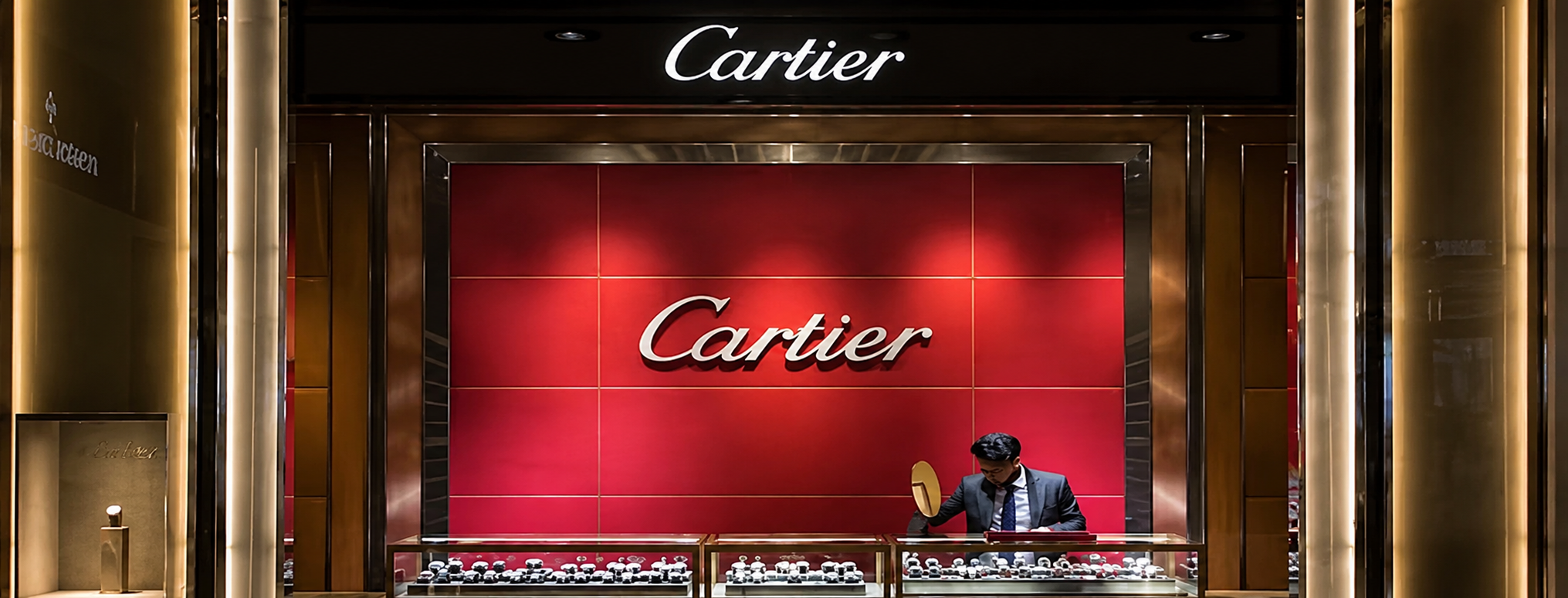
This performance demonstrates that consumers distinguish between different categories of luxury during uncertain periods. High jewelry—particularly creations from houses such as Cartier and Van Cleef & Arpels—is often perceived as more enduring, emotionally meaningful, and materially justifiable than certain fashion products. Gold, precious stones, exceptional craftsmanship, and timeless design provide a powerful sense of lasting value.
By contrast, brands that have become overly dependent on trends, seasonal collections, and frequent shifts in creative direction may experience particularly sharp declines. During times of crisis, consumers are less willing to embrace expensive products lacking a clear and consistent identity.
China Is No Longer the Automatic Engine of Growth
Over the past two decades, China has been the most important source of new luxury consumers. The expansion of the middle and upper classes, rapid urbanization, international travel, and a strong gift-giving culture created enormous demand for European luxury goods.
However, the slowdown of the Chinese economy, problems in the real estate sector, weakening consumer confidence, and changing attitudes toward the public display of wealth have made Chinese demand considerably less predictable. As a result, the industry has lost its ability to offset every challenge in Europe or America through seemingly unlimited growth in China.
During 2025, signs of gradual improvement began to emerge. LVMH reported a return to organic growth in the third quarter of the year, while business in mainland China returned to positive territory. Nevertheless, the Fashion & Leather Goods division continued to decline, demonstrating that the recovery was far from uniform.
The behavior of the Chinese luxury consumer has also changed. Buyers are now better informed, more demanding, and increasingly interested in local designers, cultural authenticity, and products that represent more than globally recognized status symbols. European luxury brands can therefore no longer assume that their heritage alone will guarantee success.
Research on both American and Chinese luxury consumers further shows that concepts such as exclusivity, desirability, and value no longer carry identical meanings across markets. Luxury houses must therefore develop market-specific approaches without compromising their overall brand identity.
The United States, the Middle East, and the New Geography of Luxury
While China slows, the United States remains one of the industry's most important pillars. A high concentration of private wealth, developed capital markets, technological entrepreneurship, and a culture of individual consumption continue to support relatively resilient demand.
According to LVMH's 2025 results, business in the United States expanded thanks to solid domestic demand, while Europe weakened during the second half of the year. The Group generated €80.8 billion in revenue in 2025, although performance varied considerably across categories and regions.
Meanwhile, the Middle East is becoming increasingly significant. Dubai, Abu Dhabi, Riyadh, and Doha are no longer merely regional shopping destinations but comprehensive luxury ecosystems featuring world-class hotels, private banking, art, gastronomy, luxury real estate, fashion, and exclusive retail.
Affluent consumers from the Gulf countries tend to be younger, highly inclined toward luxury spending, and particularly interested in bespoke products. Consequently, leading brands are opening larger flagship boutiques, organizing private events, and adapting collections to the cultural characteristics of the region.
Growth is also being recorded in Latin America, India, and Southeast Asia, although these markets are not yet capable of replacing the scale once provided by China. Bain's 2025 analysis highlighted particularly strong performance in the Middle East, Latin America, and selected Southeast Asian markets.
The luxury industry is therefore becoming increasingly geographically diversified. In the future, relying excessively on a single country, one generation, or one customer segment will represent a growing strategic risk.
From Products to Experiences
During periods of turbulence, part of luxury spending shifts from physical products toward experiences. Wealthy clients increasingly spend on luxury hotels, private travel, wellness, fine dining, yachts, cultural events, and branded residential developments.
The reason is not merely changing taste. Experiences provide greater personalization, emotional value, and privacy. A handbag or watch may become widely recognizable, whereas a tailor-made journey, private dinner, or residence designed specifically for an individual is far more difficult to replicate on a mass scale.
For this reason, luxury fashion houses are increasingly expanding into hospitality, interior design, restaurants, and branded residences. Luxury is no longer simply an object to own. It has become a place to stay, a service to enjoy, and an experience to remember.
However, expansion into new categories also carries risks. A brand that indiscriminately places its name on hotels, furniture, restaurants, and real estate may ultimately weaken its own identity. Expansion succeeds only when every new venture reflects the same standards of design, craftsmanship, service, and exclusivity that define the brand's core business.
The Secondary Market Is Redefining Value
The market for pre-owned luxury goods has become an integral part of the industry. Before purchasing a handbag, watch, or piece of jewelry, consumers increasingly examine how much the product is likely to be worth several years later. As a result, the secondary market has become a public measure of a brand's true strength.
Products that maintain or increase their value reinforce their rarity and long-term desirability. Conversely, products that lose a significant portion of their value immediately after purchase suggest that their retail price may have reflected marketing rather than genuine scarcity.
This does not mean that every luxury product must be viewed as an investment. For most luxury items, personal enjoyment, beauty, and functionality remain their primary purpose. Nevertheless, the fact that consumers can easily monitor auction results and resale platforms places increasing pressure on brands.
The secondary market also attracts new customers, particularly younger generations who gain access to luxury at lower prices. At the same time, it may weaken distribution control, increase the circulation of counterfeit goods, and reduce direct relationships between brands and consumers. As a result, some luxury houses are developing certified resale, repair, and restoration programs.
Discretion Becomes the New Display of Status
During periods of political and social instability, openly displaying wealth can become undesirable or even risky. Consequently, many affluent consumers are shifting from highly visible logo products toward more discreet luxury recognizable only to those with deep knowledge of the industry.
This trend is often described as "quiet luxury," yet its essence extends far beyond minimalist aesthetics. It reflects the desire for craftsmanship, materials, and tailoring to matter more than visible branding. Consumers seek products that communicate membership within a particular circle without requiring public recognition.
Global turbulence has strengthened this shift. In societies burdened by economic inequality, wars, and rising living costs, overt displays of wealth may provoke negative reactions. Quiet luxury allows affluent consumers to preserve quality and exclusivity while minimizing public exposure.
Nevertheless, quiet luxury is not universally dominant. In markets where luxury continues to serve as an important symbol of social achievement, visible logos remain highly desirable. Luxury brands must therefore balance global trends with local cultural expectations.
Creativity Once Again Becomes a Business Imperative
During periods of strong market expansion, companies can often conceal a lack of creativity through price increases, broader distribution, and intensive marketing. When the market slows, however, creative relevance once again becomes a decisive competitive advantage.
Consumers need a reason to return to the boutique. Changing the color of an existing product or organizing another marketing event is no longer enough. Brands must offer designs that generate genuine excitement while remaining unmistakably connected to their heritage.
This is an especially demanding challenge for major fashion houses. They are expected to introduce novelty several times a year without compromising the continuity of their identity. Frequent changes of creative directors can further confuse customers and make a brand appear to be little more than a corporate platform lacking a coherent aesthetic language.
On the other hand, complete resistance to change can alienate younger generations of consumers. The most successful luxury houses therefore do not choose between tradition and innovation—they use tradition as the foundation for innovation.
Controlling Distribution Is More Important Than Short-Term Revenue
During periods of crisis, luxury brands face the temptation to dispose of excess inventory through discounts, outlet stores, and wholesale channels. While such measures may temporarily improve cash flow, they can permanently damage the perception of rarity.
A customer who knows that a product will soon be available at a discount has little incentive to purchase it at full price. Once consumers become accustomed to discounts, restoring pricing discipline becomes extremely difficult.
For this reason, the strongest luxury brands prefer reducing production rather than lowering prices. They carefully control wholesale distribution, invest in their own boutiques, and manage customer relationships directly. In doing so, they willingly accept short-term revenue declines in order to preserve the long-term value of the brand.
This issue has become even more important because of new regulatory requirements. From July 2026, large fashion companies operating within the European Union face a ban on destroying unsold clothing and footwear. The regulation will force companies to plan production more accurately, develop recycling and refurbishment systems, and find solutions for excess inventory without undermining brand exclusivity.
As a result, inventory management is no longer merely an operational issue—it has become a strategic component of luxury brand identity.
The Luxury Industry Returns to Discipline
During years of rapid growth, many luxury companies expanded their retail networks, increased hiring, enlarged marketing budgets, and invested heavily in major events. Slowing demand is now forcing them to exercise stricter cost control, streamline distribution, and adopt a more selective approach to investment.
However, cost-cutting in luxury has clear limits. Brands cannot compromise on materials, craftsmanship, customer service, or the quality of their retail environments without undermining the very reasons consumers are willing to pay premium prices.
Discipline therefore does not mean lowering standards. Rather, it involves eliminating inefficiencies, improving demand forecasting, reducing unsuccessful product launches, controlling inventories, and directing capital toward the strongest product categories.
LVMH's 2025 results illustrate this necessity. Although the Group maintained exceptionally high revenues overall, its Fashion & Leather Goods division declined, while Watches & Jewelry and Selective Retailing achieved stronger performances.
In other words, being a large conglomerate is not enough. Success increasingly depends on maintaining a balanced portfolio, owning strong individual maisons, and reallocating capital quickly toward areas where genuine demand exists.
Who Wins in a Turbulent World?
In an environment of global uncertainty, the most resilient companies are not necessarily the largest brands, but those possessing several essential characteristics.
First, they must have a clearly defined identity. Consumers need to understand what the house represents and why its products cannot simply be replaced by those of competitors.
Second, they must maintain control over production and distribution. Excessive availability reduces desirability, while uncontrolled wholesale distribution and frequent discounting gradually erode brand equity.
Third, they must cultivate close relationships with their most valuable clients. In the highest segment of luxury, sales increasingly depend not on anonymous transactions but on private presentations, bespoke creations, and long-term personal relationships.
Fourth, pricing must be supported by quality, rarity, and exceptional service. Consumers may accept high prices, but they are becoming increasingly unwilling to accept arbitrary price increases.
Fifth, brands must achieve both geographical and product diversification. Excessive dependence on Chinese tourists, a single product category, or one generation of customers represents a significant strategic vulnerability.
Finally, a successful luxury house must recognize when not to grow. In mass-market industries, producing more units generally leads to greater success. In luxury, excessive growth can destroy the very scarcity upon which long-term value depends.
Conclusion: Turbulence Returns Luxury to Its Essence
Global turbulence does not signal the end of the luxury industry. Instead, it marks the end of easy luxury—a business model in which a powerful logo, ever-higher prices, and a rapidly expanding Chinese market were sufficient to guarantee success.
In the new phase of the market, consumers demand more. They seek products with authentic heritage, exceptional quality, emotional significance, and lasting value. They expect personalized service, a clear aesthetic identity, and the feeling that they are not merely one among millions purchasing the same symbol of status.
For this reason, the industry will likely continue to grow—but at a slower, more uneven, and increasingly selective pace. Altagamma's outlook for 2026 forecasts moderate growth for the global luxury market as a whole, while personal luxury goods are expected to expand by between two and four percent.
The best-positioned brands will be those that understand that luxury is not synonymous with high prices. Luxury is the ability to create something genuinely scarce, exceptionally well crafted, culturally meaningful, and sufficiently enduring to retain its value even as the world around it changes rapidly.
For precisely this reason, the luxury industry does not respond to turbulence by retreating. Instead, it returns to discipline, heritage, rarity, and its most valuable clients. For luxury, crisis is both a threat and a corrective—it strips away the illusion of exclusivity and reveals which brands truly possess what money alone cannot create: authenticity, trust, and enduring desirability.
You’re using our basic model. Log in or sign up for more intelligence.
/ / /
"Standard Prva" LLC Bijeljina is a company registered in Bijeljina at the District Commercial Court in Bijeljina. Company’s activities are accountancy, repurchases of receivables, angel investing and other related services. Distressed debt is a part of the Group within which the company repurchases the receivables, which function and are not returned regularly.
Lawyer’s Office Stevanović is the leading lawyer’s office in the region with the seat in Bijeljina. The LO abbreviation represents Lawyer’s Office of Vesna Stevanović and Lawyer’s Office of Miloš Stevanović.
Contact for media press@advokati-stevanovic.com or via telephone 00 387 55 230 000 or 00387 55 22 4444.