War in Iran and Possible Economic Consequences: A Global Shock Beyond the Region
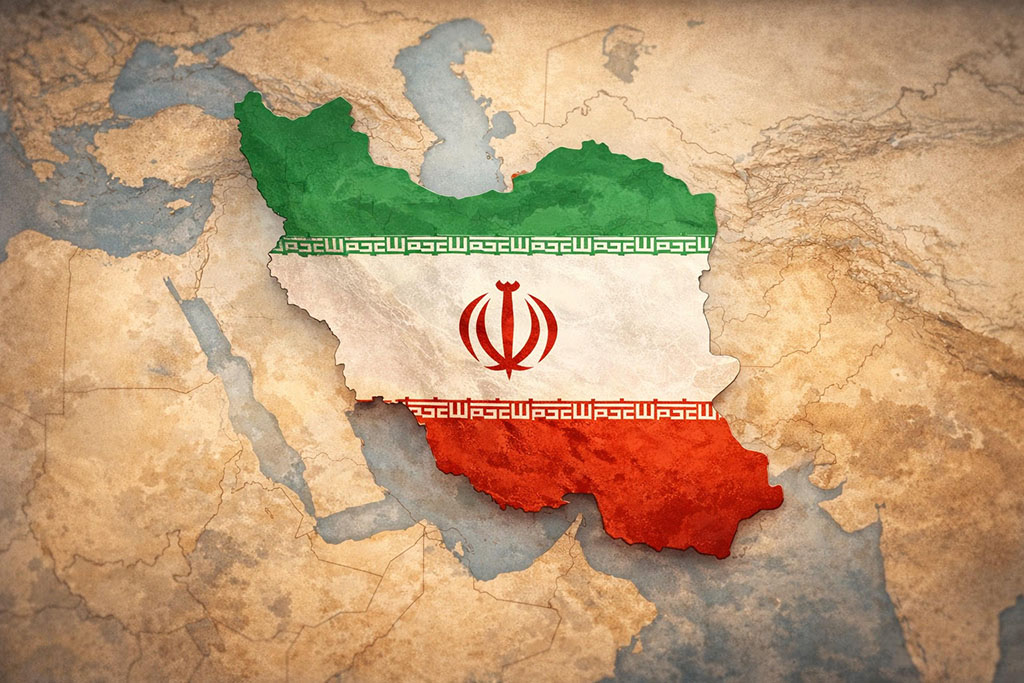
28.02.2026The Middle East is once again at the center of global attention. The escalation of conflict in and around Iran represents one of the most serious security crises in recent years, with the potential to evolve into a broader regional, and even global, disruption. While the military dimension of the conflict is most closely followed through reports of attacks and counterattacks, the true depth of the crisis will be measured by its economic consequences.
In the modern world, wars are no longer merely local events — they are risk multipliers that affect energy markets, financial markets, investment flows, transport routes, and currency stability. That is precisely why it is necessary to look at the broader picture: what does the war in Iran mean for the global economy, and what implications could it have for Europe and the Western Balkans region?
Energy Security – The Key Risk Point
Iran is one of the significant producers of oil and gas derivatives. Its geographical position further increases its strategic importance — particularly due to its proximity to the Strait of Hormuz, one of the most important energy corridors in the world. A substantial percentage of global crude oil trade passes through this strait.
Any disruption in that area — whether through military threats, restrictions on navigation, or increased insurance costs for ships — immediately affects energy prices. Even the mere perception of risk can trigger increases in oil and gas prices, regardless of whether a physical disruption of supply has actually occurred.
The consequences of higher energy prices are multi-layered:
- Rising transportation and production costs,
- Inflationary pressures in both developed and developing economies,
- Increased budget expenditures for energy subsidies,
- Additional burdens on energy-dependent industries.
European economies, which have already been under pressure from energy shocks in recent years, are particularly sensitive to such disruptions.
Financial Markets and Capital – Flight to Safety
In times of geopolitical instability, capital seeks safety. Investors traditionally withdraw from riskier markets and turn to:
- Gold,
- U.S. government bonds,
- Stable currencies,
- The defense industry.
The result is increased volatility in stock markets, particularly in the energy, transport, and insurance sectors. The cost of insuring transport routes also rises, while financing costs increase in unstable regions.
For countries with weaker fiscal capacity, this may mean:
- Higher interest rates on borrowing,
- Reduced foreign investment,
- Increased currency risk.
Today’s global economy is far more interconnected than it was a few decades ago — any instability in the Middle East is reflected in markets across Europe, Asia, and North America.
Impact on Trade Flows and Logistics
The Middle East represents a key transit point for maritime trade between Asia and Europe. If long-term disruptions to shipping security were to occur, this would lead to:
- Extended transport routes,
- Rising container shipping costs,
- Delays in supply chains,
- Additional costs for global companies.
In a world already sensitive to supply chain disruptions, every new conflict further intensifies business uncertainty.
Regional Effects and the Western Balkans
Although the Western Balkans is not geographically directly affected by the conflict, indirect consequences could be significant:
- Rising fuel and energy prices,
- Inflationary pressures on consumer goods,
- Possible slowdown of foreign investment flows,
- Increased caution by banks in lending.
For economies already sensitive to external shocks, maintaining fiscal discipline and diversifying energy and capital sources is crucial.
Long-Term Geopolitical Implications
The war in Iran should not be viewed in isolation. It is part of a broader global power realignment. If the conflict were to be prolonged or expanded, the following long-term consequences are possible:
- Further strengthening of the military-industrial complex,
- Accelerated redirection of energy policies toward alternative sources,
- Redefinition of alliances and trade partnerships,
- Strengthening the role of Asian economies in the global energy balance.
Every serious crisis accelerates structural changes that would otherwise take years.
Conclusion
The war in Iran represents far more than a regional conflict. It is a test of the stability of the global economy, the resilience of energy markets, and the ability of the international community to prevent broader destabilization.
The economic consequences will depend not only on the duration of the conflict but also on its geographic scope. If it remains limited, the effects will be primarily market-based and short-term. If it expands, the world could enter a new phase of energy and financial uncertainty.
For businesses, investors, and government institutions, it is crucial to act proactively: manage risks, diversify supply sources, and preserve financial stability.
In times of global turbulence, stability becomes the greatest value.
StandardPrva will continue to monitor all global developments that may affect the domestic economy.
/ / /
"Standard Prva" LLC Bijeljina is a company registered in Bijeljina at the District Commercial Court in Bijeljina. Company’s activities are accountancy, repurchases of receivables, angel investing and other related services. Distressed debt is a part of the Group within which the company repurchases the receivables, which function and are not returned regularly.
Lawyer’s Office Stevanović is the leading lawyer’s office in the region with the seat in Bijeljina. The LO abbreviation represents Lawyer’s Office of Vesna Stevanović and Lawyer’s Office of Miloš Stevanović.
Contact for media press@advokati-stevanovic.com or via telephone 00 387 55 230 000 or 00387 55 22 4444.