The Strait of Hormuz – The Geopolitical Heart of the World
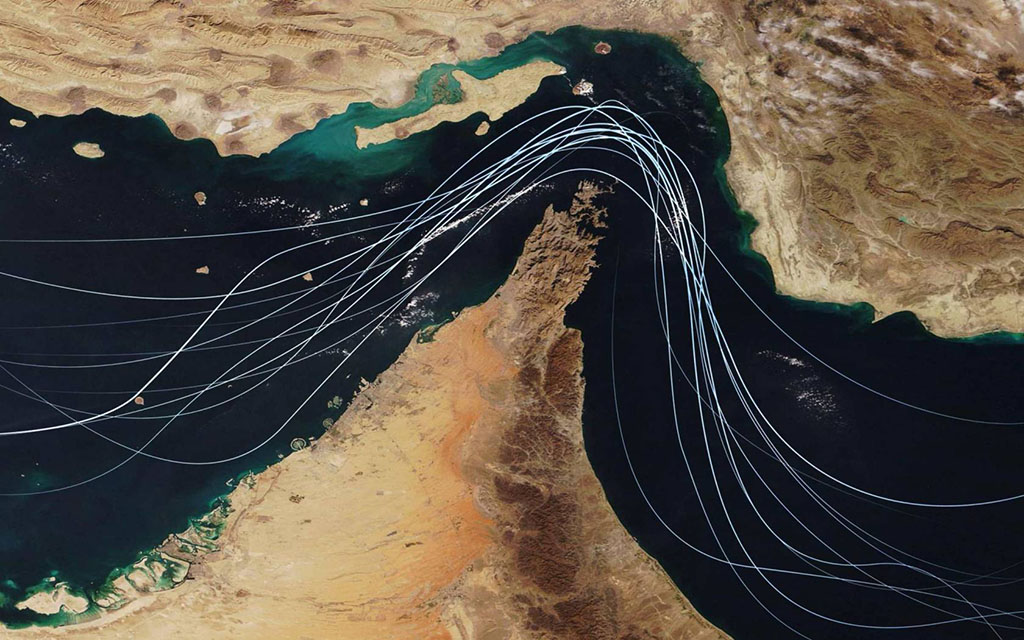
17.04.2026The Strait of Hormuz is not just a geographic passage between Iran and Oman – it is an artery of the global economy. At its narrowest point, only about 33 kilometers wide, this strait represents one of the most critical points on the planet through which the energy that powers the world flows daily. Its importance is not only economic, but deeply political, military, and strategic.
The Energy Pulse of the Planet
Estimates suggest that between 20% and 30% of global oil trade passes through the Strait of Hormuz. The countries of the Persian Gulf – Saudi Arabia, the United Arab Emirates, Kuwait, Qatar, and Iraq – are almost entirely dependent on this route for exporting oil and gas to Asia, Europe, and the rest of the world.
Any disruption in this narrow maritime corridor automatically sends shockwaves through global markets. Oil prices spike, stock markets react nervously, and political tensions immediately spill over into international relations. In this sense, Hormuz is much more than geography – it is a mechanism for controlling global stability.
Who Actually Controls the Strait?
Formally and legally, the Strait of Hormuz is an international waterway. Under the United Nations Convention on the Law of the Sea, ships of all nations have the right to “innocent passage.” However, reality is far more complex.
The northern coast of the strait is controlled by Iran, which for decades has used its geographic position as a strategic advantage. The southern coast belongs to Oman, specifically its Musandam exclave, which is territorially separated from the rest of the country.
Iran has never hidden the fact that it views the strait as a lever of power. During periods of escalation – whether due to sanctions or conflicts with the West – Tehran has repeatedly threatened to close the passage. Such threats, although rarely carried out, have a massive psychological and market impact.
The Shadow of Great Powers
Although the strait lies between Iran and Oman, real control is under constant supervision by global powers. The United States has maintained a strong military presence in the region for decades, including naval fleets stationed in Bahrain. Their mission is clear: ensure freedom of navigation and prevent any unilateral blockade.
In addition to the U.S., other powers such as the United Kingdom and France occasionally participate in patrols, while Asian economies – particularly China and India – closely monitor the situation because they are directly dependent on this energy flow.
Hormuz is therefore a rare space where local geography transforms into a global geopolitical game.
Balancing on the Edge of Conflict
The paradox of the Strait of Hormuz lies in its fragility. A single serious escalation – a military incident, an attack on a tanker, or a political decision – is enough to send the global system into shock. That is precisely why no side goes all the way.
Iran knows that closing the strait would also harm its own economy. The West knows that military escalation would destabilize the entire Middle East. As a result, the game is played on the edge – through threats, shows of force, and limited incidents, but without a complete breakdown.
Conclusion: The Power of a Passage
The Strait of Hormuz is an example of how geography can become destiny. A small space, yet immense power. Formally international, practically divided, and essentially under global surveillance.
In a world still dependent on fossil fuels, Hormuz remains one of the key points through which not only oil flows, but also political influence, strategic decisions, and the balance of power between East and West.
Who controls Hormuz?
The answer is both simple and complex at the same time: no one – and everyone.
/ / /
"Standard Prva" LLC Bijeljina is a company registered in Bijeljina at the District Commercial Court in Bijeljina. Company’s activities are accountancy, repurchases of receivables, angel investing and other related services. Distressed debt is a part of the Group within which the company repurchases the receivables, which function and are not returned regularly.
Lawyer’s Office Stevanović is the leading lawyer’s office in the region with the seat in Bijeljina. The LO abbreviation represents Lawyer’s Office of Vesna Stevanović and Lawyer’s Office of Miloš Stevanović.
Contact for media press@advokati-stevanovic.com or via telephone 00 387 55 230 000 or 00387 55 22 4444.