
Lufthansa Group: Record Revenues, Declining Profitability and the Battle for Competitiveness
26.11.2026STANDARDPRVA | Business and Economic Analyses
26 November 2026
Germany’s Lufthansa Group, one of the world’s largest aviation groups, is entering a particularly interesting phase of its business development. Despite record revenues, strong demand for travel and an ambitious acquisition strategy, the company is facing significant pressure on profitability, rising operating costs and the need for internal restructuring.
A particular paradox is that aircraft maintenance and cargo transportation are playing an increasingly important role in the group’s profitability, while its flagship airline, Lufthansa, is facing structural challenges.
1. Financial Results in 2026
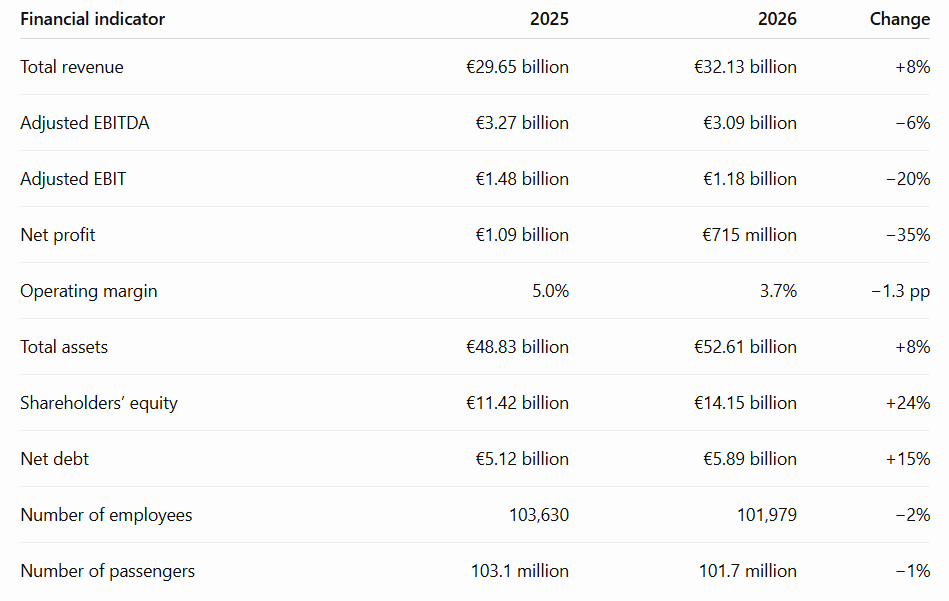
According to the official financial statements published on 3 November 2026, the group’s performance during the first nine months of the year was as follows:
 Source: Lufthansa Group, Third Quarter 2026 Financial Report.
StandardPrva analysis: Revenue growth accompanied by a 35% decline in net profit represents a warning sign for management. The company is expanding its financial operations but is failing to proportionally increase the value it creates for its shareholders.
2. Who Is Actually Making Money Within the Lufthansa Group?
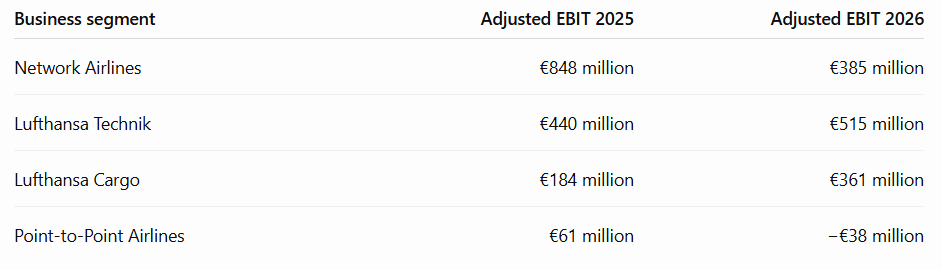
One of the most interesting aspects of the group’s performance is the distribution of operating profit across its business segments.
 January–September period.
Lufthansa Technik, the company specialising in aircraft maintenance, servicing and repair, generates higher operating profit than the entire Network Airlines segment.
Lufthansa Cargo is also reporting exceptionally strong results.
This is an excellent example of the importance of business diversification. When the core business comes under pressure, related activities can become a stabilising force for the entire group.
3. The Lufthansa Group’s Biggest Challenges
High Fuel Costs
The group expects fuel costs to reach €9.3 billion in 2026, equivalent to approximately BAM 18.2 billion.
Geopolitical instability, particularly in the Middle East, is placing additional pressure on operations. Lufthansa uses financial instruments to hedge against price fluctuations, but even such protection cannot completely eliminate the risk.
High Labour Costs and Trade Union Pressure
The German business model, characterised by strong trade unions, high wages and extensive employee rights, presents a challenge for Lufthansa compared with competitors operating more flexible business models.
Strikes by pilots and cabin crew further affected the group’s results during the first half of the year.
Competition from the Middle East
Emirates, Qatar Airways and Etihad are formidable competitors in the intercontinental travel segment. Their business models, geographical locations and investments in service quality create long-term pressure on European airlines.
Complex Organisational Structure
Lufthansa must simultaneously manage different brands, national markets, fleets, collective labour agreements and airport hubs. Every new acquisition increases market strength but also adds to management complexity.
4. Is Lufthansa Financially at Risk?
Based on currently available indicators, the group is not facing an immediate financial threat.
As of 30 September 2026, the group reported the following figures:
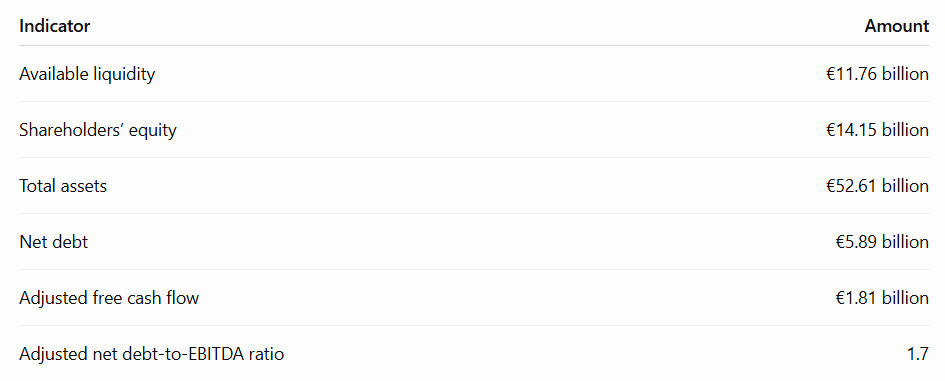 The group has substantial financial reserves, sufficient capital and access to financial markets. Its main problem at present is not liquidity, but the insufficient profitability of its core business relative to the size of its operations and the capital employed.
5. Lufthansa Continues Its Acquisition Strategy
Chief Executive Officer Carsten Spohr is continuing his strategy of building an integrated European aviation group.
Two processes are particularly significant:
ITA Airways – Lufthansa plans to increase its ownership stake from 41% to 90% during 2027.
TAP Air Portugal – Lufthansa has been selected as part of Portugal’s privatisation process, which could give the group significant opportunities to expand into Brazil and South America. The transaction has not yet been completed.
It is clear that Lufthansa does not want to remain merely Germany’s national airline, but aims to become one of the dominant consolidators in the European aviation market.
Such a strategy makes economic sense, provided management can achieve cost savings through company integration, procurement optimisation and rationalisation of its flight network.
6. Expectations for the End of 2026
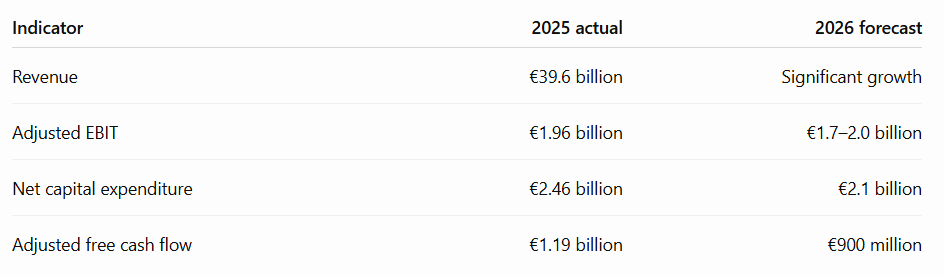 Management has reduced the upper end of its expected operating profit range from €2.2 billion to €2 billion.
7. StandardPrva Risk Assessment
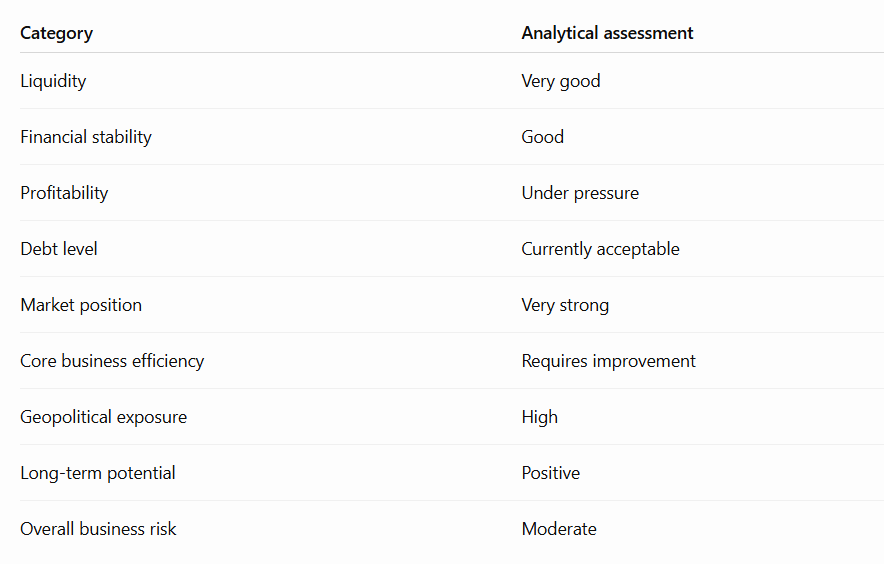 These assessments represent a qualitative analytical evaluation, not an official credit rating.
8. What Can Entrepreneurs Learn from Lufthansa’s Example?
The Lufthansa Group demonstrates how important it is to distinguish between company growth and the creation of new value.
A company can generate tens of billions of euros in revenue, employ more than 100,000 people and have a globally recognised brand, while simultaneously facing serious profitability challenges.
It is particularly significant that supporting activities, such as technical maintenance and logistics, can become more profitable than the core business for which the company was originally established.
For every large business organisation, it is essential to regularly analyse the profitability of each organisational unit, its contribution to overall performance, the justification for investments and the return on invested capital.
StandardPrva Conclusion
Lufthansa is not a company facing a crisis of survival. It is a company going through a crisis of efficiency and a transformation of its business model.
Its financial strength allows it to continue investing, pursuing acquisitions and modernising its fleet. However, its long-term success will depend on management’s ability to reduce operating costs, increase employee productivity and restore the profitability of its flagship airline.
The next three years could prove decisive in determining the Lufthansa Group’s position in the global market.
The size of a company is no guarantee of success. The true strength of a business organisation is measured by its ability to turn available resources into sustainable profit and new value.
/ / /
"Standard Prva" LLC Bijeljina is a company registered in Bijeljina at the District Commercial Court in Bijeljina. Company’s activities are accountancy, repurchases of receivables, angel investing and other related services. Distressed debt is a part of the Group within which the company repurchases the receivables, which function and are not returned regularly.
Lawyer’s Office Stevanović is the leading lawyer’s office in the region with the seat in Bijeljina. The LO abbreviation represents Lawyer’s Office of Vesna Stevanović and Lawyer’s Office of Miloš Stevanović.
Contact for media press@advokati-stevanovic.com or via telephone 00 387 55 230 000 or 00387 55 22 4444.